
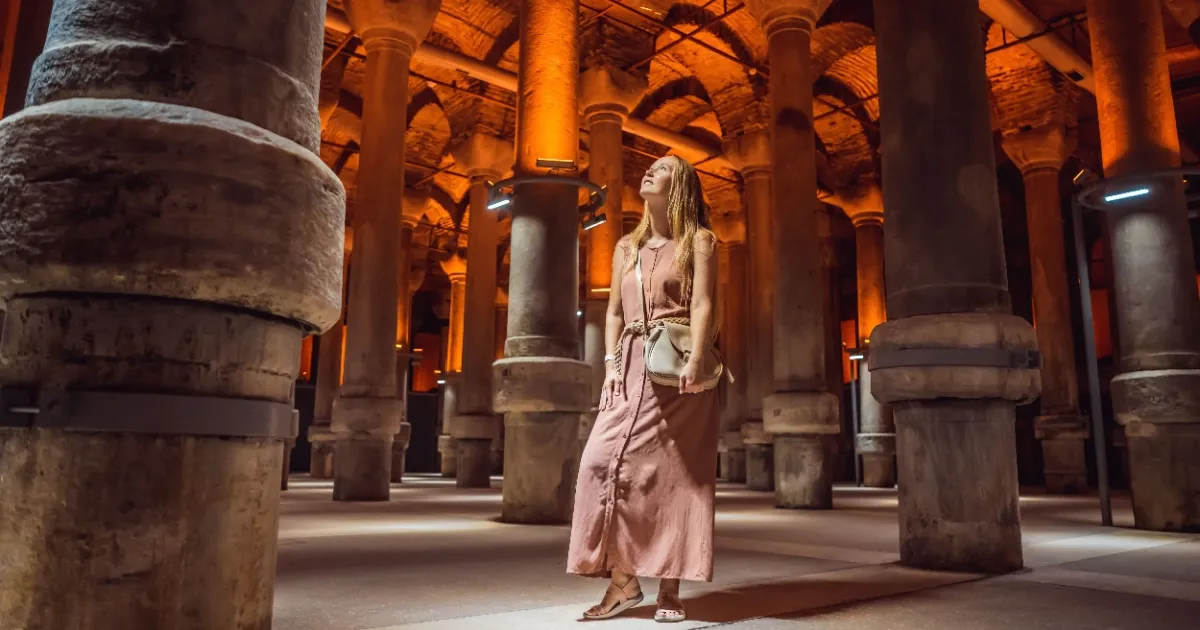
Illuminated columns, reflections on the water and the mysterious Medusa heads: the Basilica Cistern offers a completely different side of Istanbul, beneath the streets of Sultanahmet.
Known in Turkish as Yerebatan Sarnıcı, this historic underground reservoir makes a memorable stop between the district’s mosques, palaces and squares.
Here is how to choose your ticket, plan your visit and discover the highlights without rushing.
Basilica Cistern at a Glance
| Question | Quick Answer |
|---|---|
| Location | Yerebatan Caddesi, Sultanahmet, near Hagia Sophia |
| Opening hours | Daily, 09:00–22:00 |
| Suggested visit | Allow 30–45 minutes inside, plus entry time |
| Main highlights | Medusa heads, rows of columns and illuminated reflections |
| Before booking | Check your ticket’s permitted entry hours, especially for an evening visit |
| Bring | Comfortable shoes, headphones and a charged phone |
Basilica Cistern Tickets
Entry Ticket + Audio Guide — €47.41
For visitors who want to explore independently with commentary on their phone.
The Istanbul Welcome Card option includes:
Download the audio guide before arriving and bring your own headphones.
Show your QR ticket at the entrance according to the booking instructions. The ticket lets you bypass the ticket-purchase queue, not mandatory security checks.
Buying at the Ticket Office

If you prefer to buy on arrival, check the displayed tariff for your visitor category and intended entry time.
Do not rely on cash: Basilica Cistern has announced payment by credit/debit card or Istanbulkart at the museum.
Can You Visit the Basilica Cistern in the Evening?

The museum publishes opening hours extending into the evening, but opening hours and ticket validity are different things.
Before planning a late visit, check:
Do not assume a daytime ticket automatically covers an evening visit.
What to See Inside the Basilica Cistern
1. The Medusa Heads

The two Medusa-head blocks, reused as column bases, are the cistern’s most recognisable features. Their unusual placement makes them especially memorable.
✅ Our suggestion: Follow the visitor route to find them, but take time to enjoy the rest of the cistern along the way.
2. The Rows of Columns

The roof is supported by 336 marble columns. Their repetition gives the underground space its striking sense of depth.
Look at the differences between the columns and capitals rather than assuming they are all identical.
3. The Weeping Column

Often called the Weeping Column or Tear Column, this decorated column stands out from the surrounding supports.
Its stylised tree-like pattern offers another example of an architectural element reused in the cistern.
4. The Lighting and Reflections

The illuminated architecture and water reflections are a large part of the experience.
Pause at different points along the walkway: the same rows of columns can look quite different as your viewpoint changes. Let other visitors pass when stopping for photographs.
Is the Basilica Cistern Worth Visiting?
We recommend it if you enjoy historic architecture, atmospheric interiors or photography. It provides a strong contrast to the open courtyards and large buildings elsewhere in Sultanahmet.
Think of it as a relatively short architectural experience, rather than a museum requiring several hours of reading and exhibits.
If your itinerary or budget is tight, compare it with your other priorities before booking. Avoid squeezing it into a gap so small that you spend the whole visit watching the clock.
Practical Tips Before You Go
Leave Time for Entry
Allow some flexibility around your booking. Security checks and visitor numbers can affect how quickly you enter, even with a prepaid ticket.
Avoid promising yourself a completely queue-free visit.
Wear Shoes with Good Grip
Choose comfortable footwear for the underground route and watch your step around changes in level. A light layer may be useful if you feel cold easily.
Prepare Your Phone
Save your ticket where you can access it easily and charge your phone before leaving your hotel.
If using an audio guide, download the content in advance rather than relying on a connection underground.
Take Photographs Considerately
Follow the venue’s current photography signs and staff instructions. Keep walkways clear, avoid shining lights at other visitors and check permission before bringing a tripod or professional equipment.
Check Accessibility Arrangements in Advance
The cistern is below street level. If you need step-free access or are bringing a stroller, confirm the current entrance, exit and assistance arrangements with the museum before booking.
Do not assume that an accessible entrance guarantees an identical arrangement at the exit.
How to Get to the Basilica Cistern
By T1 Tram
Take the T1 tram to Sultanahmet, then walk towards Yerebatan Caddesi and follow signs for Yerebatan Sarnıcı.
Sultanahmet is on the official Kabataş–Bağcılar tram route. Check the T1 line.
From Your Hotel or Another Attraction
Search for “Basilica Cistern” or “Yerebatan Sarnıcı” when planning your route. Use the full name: Istanbul has several historic cisterns, and they are not interchangeable destinations.
A Short History of the Basilica Cistern

The Basilica Cistern was constructed in the sixth century under Emperor Justinian I to store water for the Great Palace and surrounding buildings.
Its scale reflects the importance of supplying water to the Byzantine capital. Today, visitors experience the structure as a historic underground monument rather than a working reservoir.
What to Visit Nearby
The Basilica Cistern fits naturally into a Sultanahmet itinerary:

Hagia Sophia: Continue with Byzantine architecture above ground.

Topkapi Palace: Allow several additional hours, especially if your ticket includes the Harem.

Blue Mosque and Sultanahmet Square: Leave time to explore the surrounding historic area.
Our suggestion: Combine the cistern with one major attraction and a relaxed break, rather than booking several tightly spaced entry times.
Contact & Map
Frequently Asked Questions
For planning, we suggest around 45 minutes inside, with additional time for entry. Leave more room in your itinerary if you want to listen to the full audio guide or take photographs.
The standalone ticket featured here is self-guided with an audio guide, not a live guided tour. If you want a guide to accompany you, choose a product that explicitly includes that service.
Check your ticket’s stated entry period before arriving. Evening opening does not automatically mean that every daytime or partner ticket is accepted during that period.
Plan Your Basilica Cistern Visit
Choose your entry period, prepare your ticket and leave time to enjoy the columns, Medusa heads and reflections.