
Covered streets, colourful shopfronts and centuries of trading history: Istanbul’s Grand Bazaar is worth exploring even if you do not plan to buy anything.
Known in Turkish as Kapalıçarşı, the bazaar is a working shopping district, not a ticketed museum. Come with time to browse, compare and take a break instead of trying to see every passage.
Grand Bazaar at a Glance
| Question | Quick Answer |
|---|---|
| Entrance fee | Free |
| Regular opening hours | Monday–Saturday, 08:30–19:00 |
| Weekly closing day | Sunday |
| Holiday closures | Religious holidays can affect access |
| Location | Beyazıt, in Istanbul’s historic centre |
| Nearest tram stop | Beyazıt-Kapalıçarşı, on the T1 line |
| Suggested visit | Allow 1–2 hours for an introduction, longer for shopping |
When Is the Grand Bazaar Open?
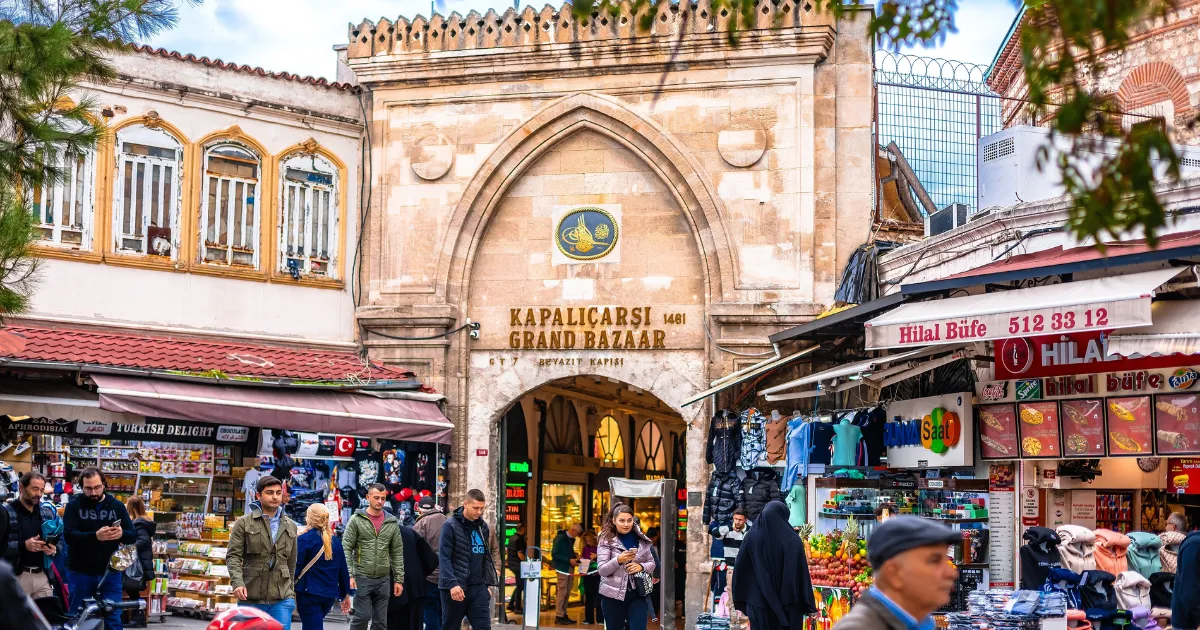
Plan your visit for Monday to Saturday. We suggest arriving during the morning, with enough time to browse before lunch.
Do not leave your only visit until Sunday: the main covered bazaar is normally closed. Some businesses in the surrounding streets may operate, but that does not mean the covered market is open.
For a visit around Ramadan Bayram or Kurban Bayram, check the announced holiday arrangements. Do not assume that the closure lasts only one day.
Do You Need a Grand Bazaar Ticket?
No. You can enter and explore independently for free.
Paid experiences are for services such as guiding, a shopping itinerary or a specialist visit—not standard admission.
Explore on Your Own
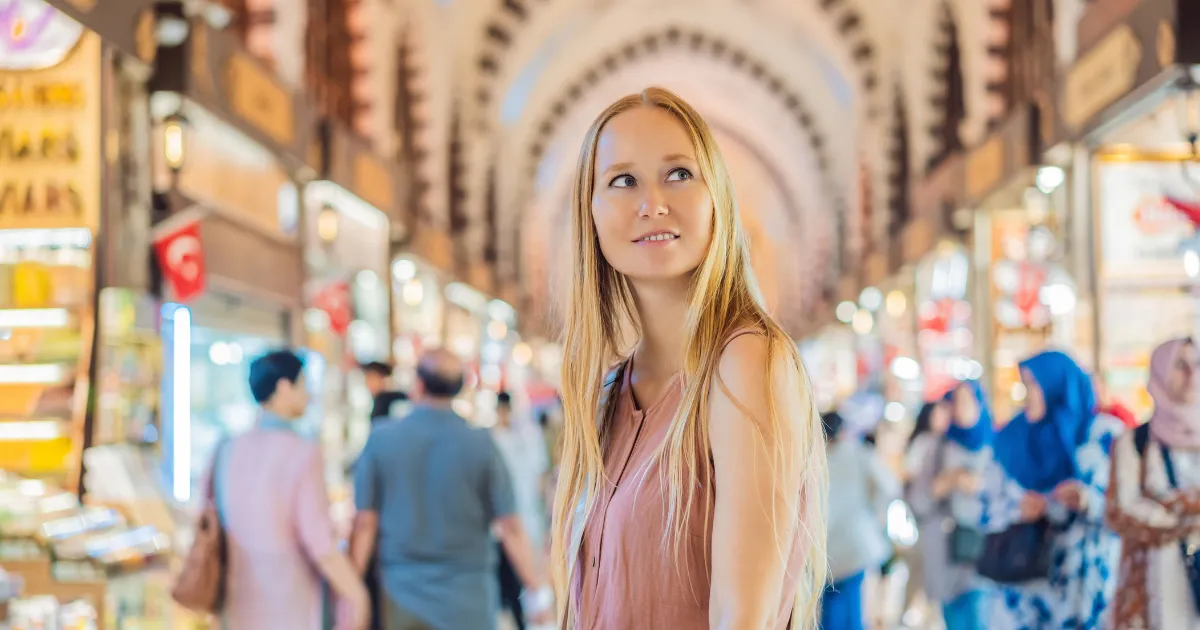
Best for a flexible visit without a fixed shopping plan.
Choose an entrance, save its location on your phone and give yourself permission to wander. You do not need to visit every street for the trip to feel worthwhile.
Join a Guided Visit
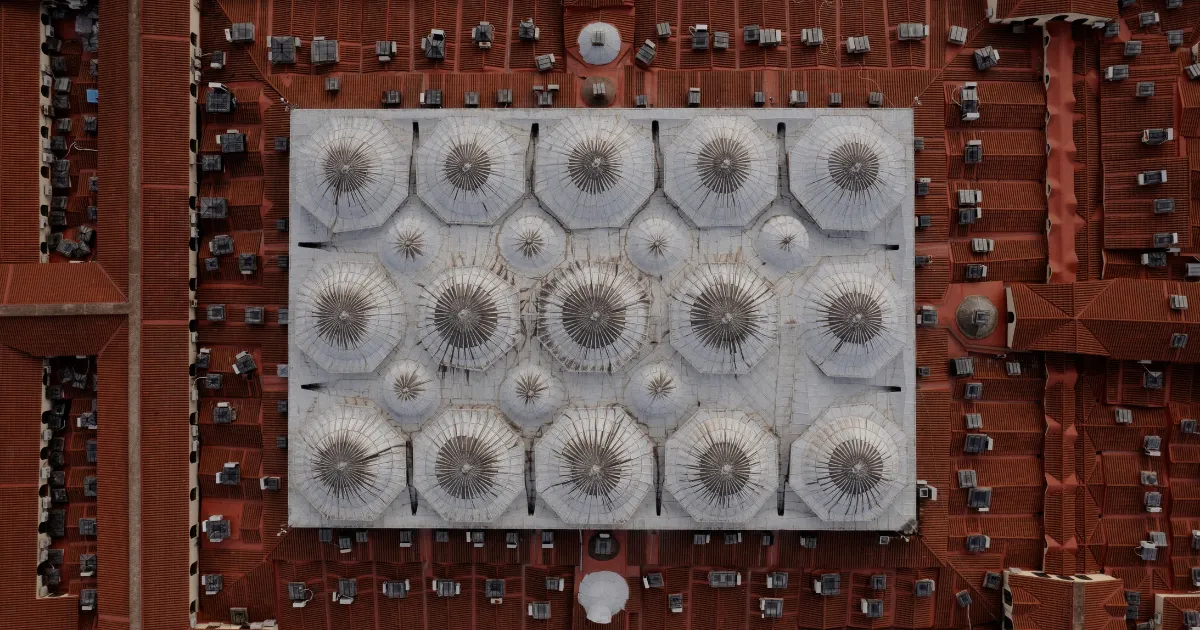
Best if you want historical context or help navigating a large market.
Before booking, ask whether the experience focuses on history, shopping or both. Check which stops are included and whether visits to particular shops form part of the itinerary.
A guide is not a guarantee of the lowest prices. Keep comparing products and make purchasing decisions at your own pace.
What to See and Do
1. Explore the Covered Streets

The experience is as much about the setting as the merchandise. Look up at the vaulted passages, notice how shop displays change between streets and allow yourself a few unplanned turns.
Save your entrance location first, so wandering does not become stressful when you want to leave.
2. Browse Jewellery, Textiles and Ceramics
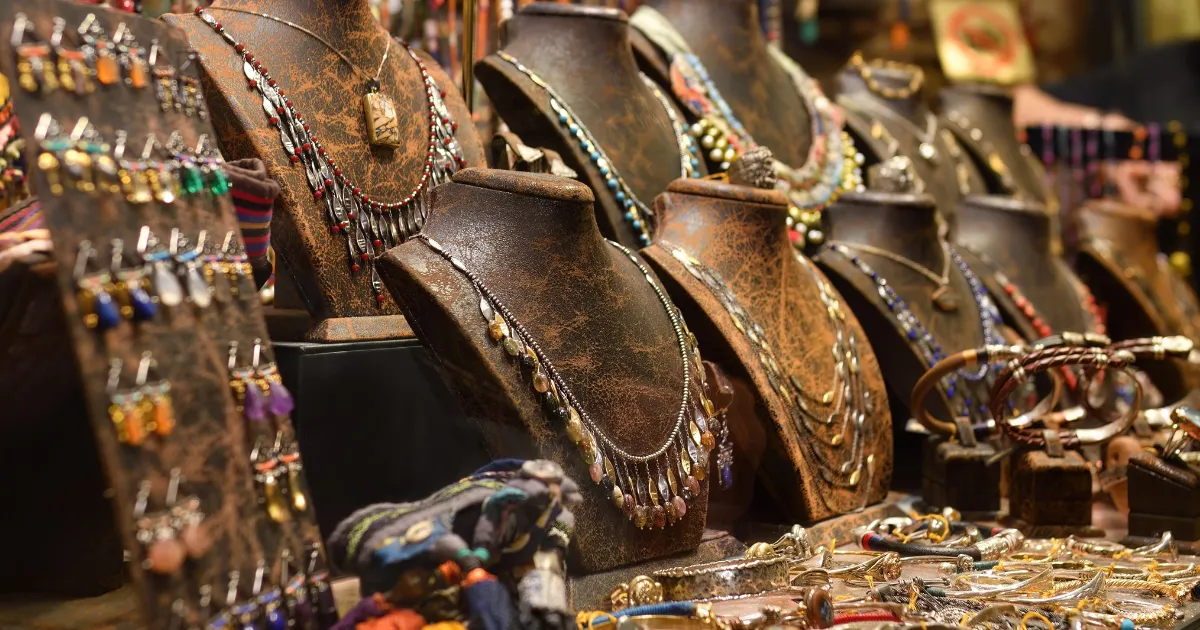
The bazaar’s range includes jewellery, carpets, textiles, ceramics, leather goods and souvenirs. The Ministry of Culture’s bazaar overview describes its mix of traditional and modern merchandise.
Do not assume that similar-looking items have the same materials, origin or workmanship. Ask questions before comparing the price.
3. Take a Break

Build a tea or coffee stop into your visit. It is easier to decide what you genuinely want after sitting down than while moving from one sales conversation to the next.
Check the menu and prices before ordering, just as you would elsewhere.
4. Explore Beyond Your Entrance
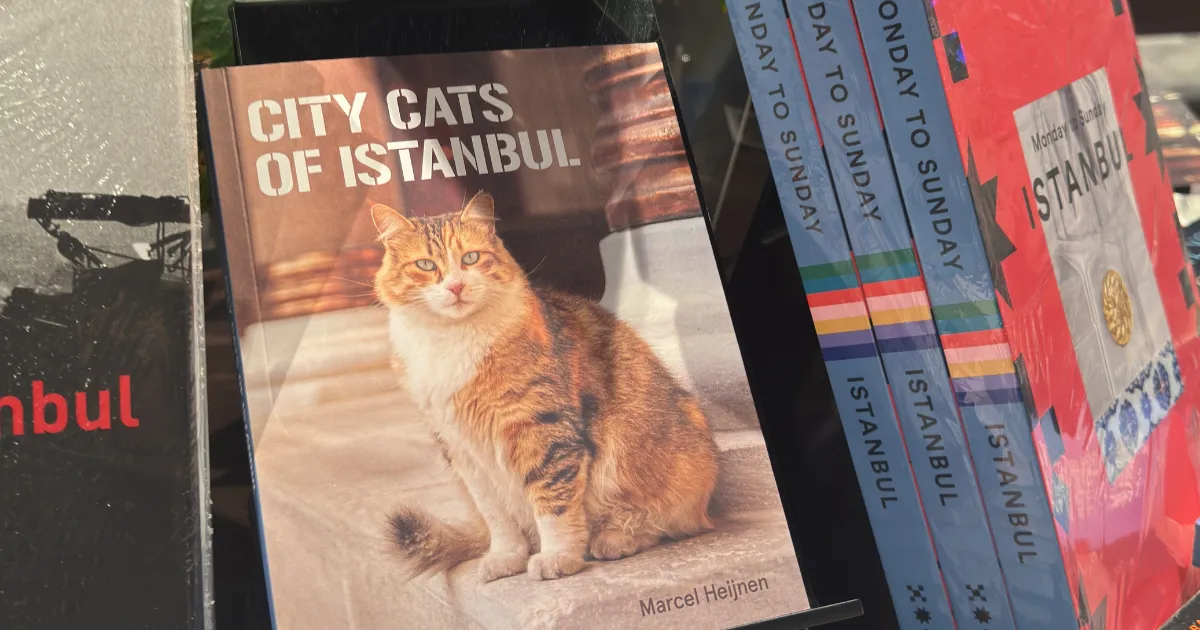
If you have extra time, continue towards the Nuruosmaniye side or visit the booksellers’ area near Beyazıt.
Keep the route manageable: a short extension is often more enjoyable than trying to cover the entire surrounding district in one outing.
What Should You Buy?
Start with something you will use, display or comfortably carry home.
“Handmade,” “antique” and “locally made” are claims to clarify, not assumptions to make.
For more detailed shopping ideas, continue to our dedicated guide:
How to Bargain Without Feeling Uncomfortable
You do not need a rehearsed bargaining performance. Try a simple approach:
Compare first. Look at similar items in more than one shop.
Ask the price clearly. Confirm the currency and whether it is per item or for a set.
Make a polite offer if you genuinely want to buy.
Agree on the final total before paying.
Walk away politely if the price does not suit you.
There is no universal rule that you should always offer half the first price. The scope for negotiation depends on the product and the seller.
You are allowed to browse without buying. A conversation should not make you feel obliged to make a purchase.
Practical Shopping Tips
Check the Payment Currency
Before confirming a card payment, read the amount and currency shown on the terminal. If paying cash in another currency, agree on the conversion and change beforehand.
Get Delivery Promises in Writing
For anything being shipped, ask for written details covering the item, total cost, delivery address and expected timing. Clarify who handles any additional charges.
Keep Track of Your Belongings
Use a secure bag and avoid leaving your phone or wallet on a counter while looking at merchandise.
Ask Before Photographing Shops
Some displays make attractive photographs, but ask before taking close-up pictures inside a business or photographing staff.
Do Not Assume Rooftops Are Public
A normal bazaar visit does not include rooftop access. If a tour advertises rooftops or workshops, verify the exact location and authorised access before booking. Do not enter closed passages or follow unofficial offers onto roofs.
A Simple Route for Your First Visit
For an uncomplicated introduction, we suggest:
Arrive at Beyazıt-Kapalıçarşı tram stop.
Enter from the Beyazıt side and save your location.
Browse a main passage, then explore a few side streets.
Stop for a drink before making any larger purchase.
Leave from your original entrance, or continue towards Nuruosmaniye if it fits your plans.
Treat this as a flexible outline, not a route you must complete. Use the bazaar association’s map to help orient yourself.
How to Get to the Grand Bazaar
From Sultanahmet

Walk towards Çemberlitaş and Beyazıt, allowing roughly 15–20 minutes, depending on your starting point and entrance.
Alternatively, take the T1 towards Bağcılar and get off at Beyazıt-Kapalıçarşı, two stops after Sultanahmet.
From Taksim

Take the F1 funicular to Kabataş, then the T1 towards Bağcılar to Beyazıt-Kapalıçarşı.
From Karaköy or Eminönü

Board the T1 towards Bağcılar and leave at Beyazıt-Kapalıçarşı. Check the official T1 route for connections.
A Short History of the Grand Bazaar
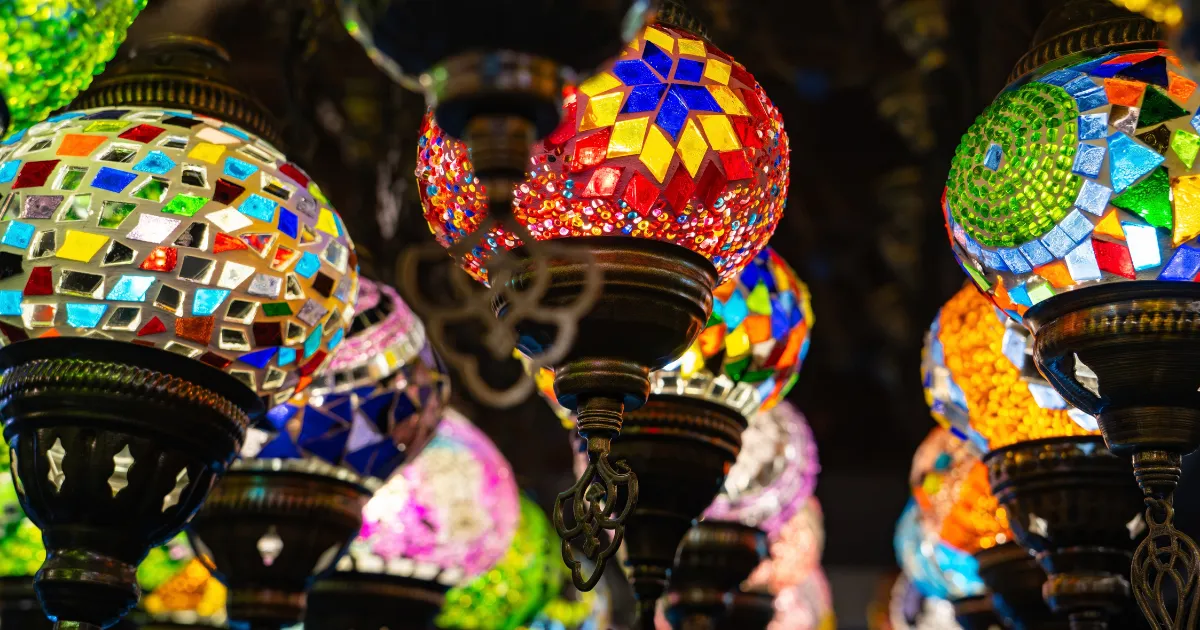
The bazaar’s foundations date to 1461, during the reign of Sultan Mehmed II. It expanded over time into a major centre for trade and valuable goods.
Rather than being built as one finished shopping complex, it developed through additions over centuries. That history helps explain its interconnected streets and trading spaces. Read more in the Ministry of Culture’s historical overview.
Contact & Map
Frequently Asked Questions
Yes. You can enjoy the architecture, displays and atmosphere without buying anything. A shorter visit may be enough if shopping is not your priority.
The main covered bazaar is normally closed on Sundays. Nearby open shops are not a substitute for access to the market itself.
Ask each shop before agreeing on a purchase. Do not assume that every seller accepts your card or offers the same terms for cash and card payments.
What to Do After Your Visit
Choose a nearby stop rather than crossing the city immediately:
Sultanahmet: Return for the Blue Mosque and the historic square.

Süleymaniye Mosque: Continue your exploration of Ottoman architecture.
Eminönü: Head towards the waterfront if it fits the rest of your day.