
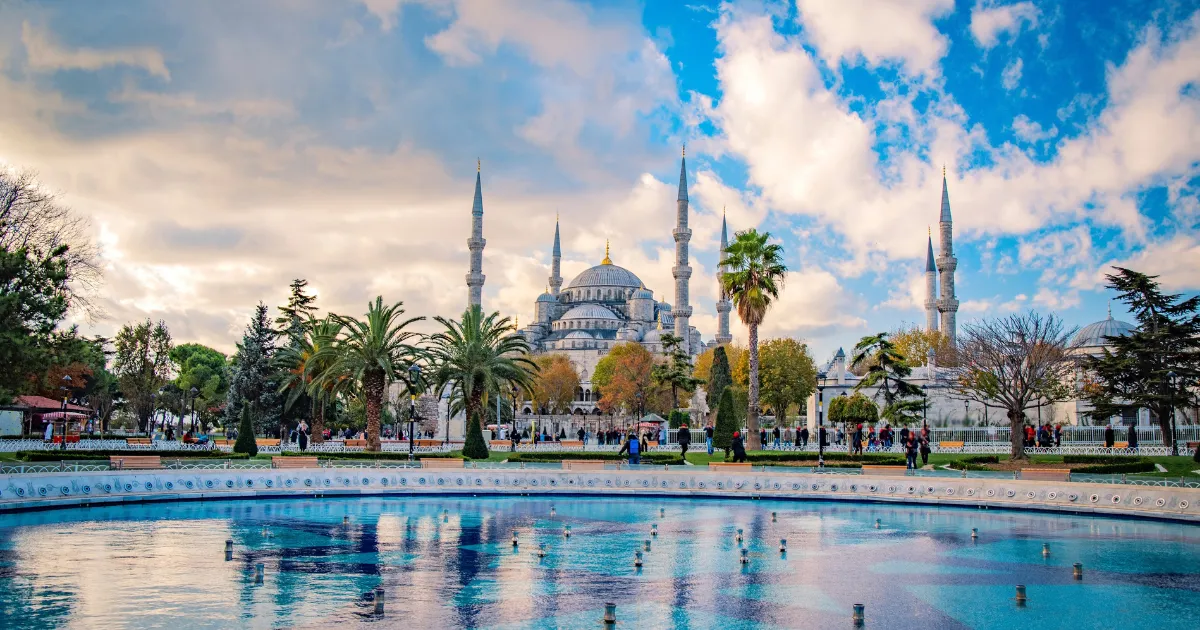
Six minarets, cascading domes and blue-patterned tiles: the Blue Mosque is one of Istanbul’s most recognisable landmarks.
Known locally as Sultanahmet Camii, it stands across the square from Hagia Sophia. It remains an active mosque, so planning your visit means checking prayer closures—not buying an entrance ticket.
Blue Mosque at a Glance
| Question | Quick Answer |
|---|---|
| Entrance fee | Free |
| Location | Sultanahmet, in Istanbul’s historic centre |
| Suggested visit | Allow 45–60 minutes for the interior and courtyard, plus any queue |
| Nearest tram stop | Sultanahmet, on the T1 line |
| Bring | Modest clothing, a headscarf for women and shoes that are easy to remove |
| Our advice | Check the visitor schedule before organising the rest of your day |
Blue Mosque Opening Hours
The mosque’s preservation association publishes these tourist visiting hours:
| Season | Visiting hours |
|---|---|
| 1 April–30 September | 08:30–19:00 |
| 1 October–31 March | 08:30–17:00 |
Last visitor admission is 30 minutes before closing. On Fridays, tourist visits begin at 14:30.
Access also pauses around the midday and afternoon prayers: from 30 minutes before the call to prayer until 15 minutes after the prayer ends.
These are sightseeing hours, not worship hours. Check the mosque’s visitor information and follow any notices at the entrance.
Do You Need a Blue Mosque Ticket?
No. Admission is free, and you do not need a museum pass.
You can visit independently during tourist visiting hours. If you see a paid “Blue Mosque ticket” online, check what is actually being sold: it may be a guided tour, audio commentary or a package including other attractions.
Visiting Independently
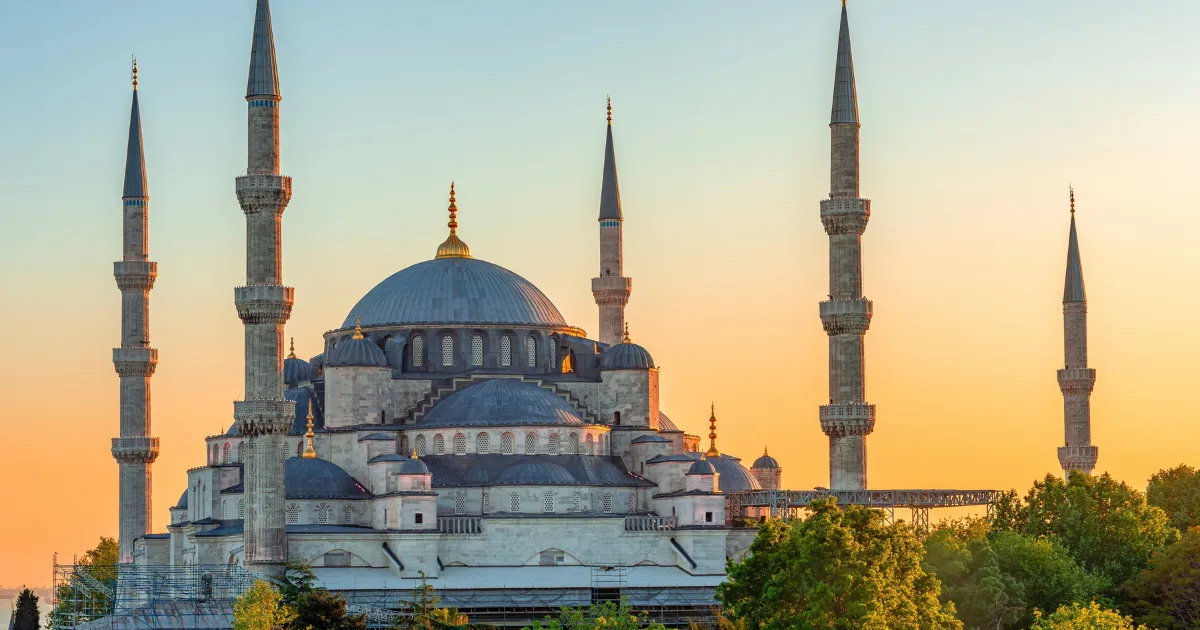
Best if you prefer a flexible, self-paced visit.
Read a little about the building beforehand, allow time for the entrance queue and explore the designated visitor area without joining a tour.
Taking a Guided Tour
Best if you want the architecture and history explained.
Before booking, check the language, meeting point, duration and whether the itinerary includes the mosque interior or only an outside introduction.
Do not assume a tour removes entrance checks or prayer-time restrictions. If a package also mentions Hagia Sophia or the Basilica Cistern, check whether their admission fees are included.
Ticket options for the Blue Mosque of Istanbul
You are currently viewing a placeholder content from Default. To access the actual content, click the button below. Please note that doing so will share data with third-party providers.
More InformationWhat to See at the Blue Mosque
1. The Tilework

The mosque’s popular name comes from the blue tones in its rich ceramic decoration. Look for floral patterns and the way the tilework changes as you move through the visitor area.
Take time to look beyond your camera screen: many of the details are above eye level.
2. The Central Dome

Look upwards to appreciate the main dome, surrounding semi-domes and the enormous supports beneath them.
The interior is not simply “all blue.” Stone, painted decoration, windows and calligraphy contribute to its appearance.
3. The Courtyard and Six Minarets

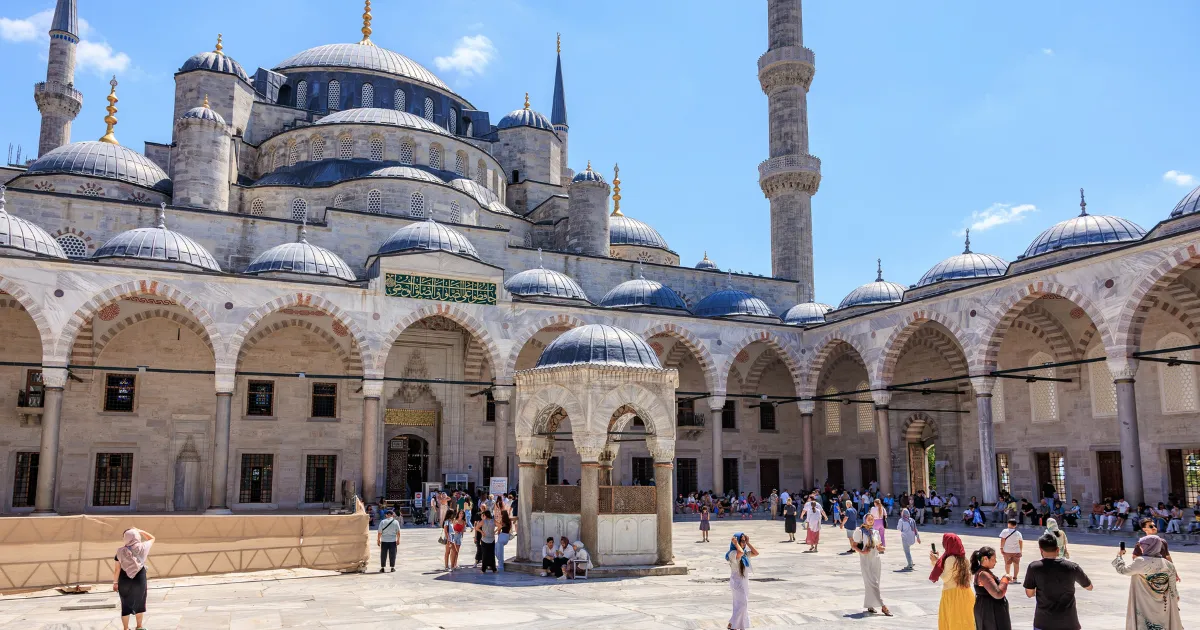
The courtyard gives you a different view of the building’s proportions. Outside, step back to see how the domes and six minarets form the mosque’s silhouette.
The Ministry of Culture’s Sultan Ahmed Mosque overview explains these architectural features.
4. Sultanahmet Square
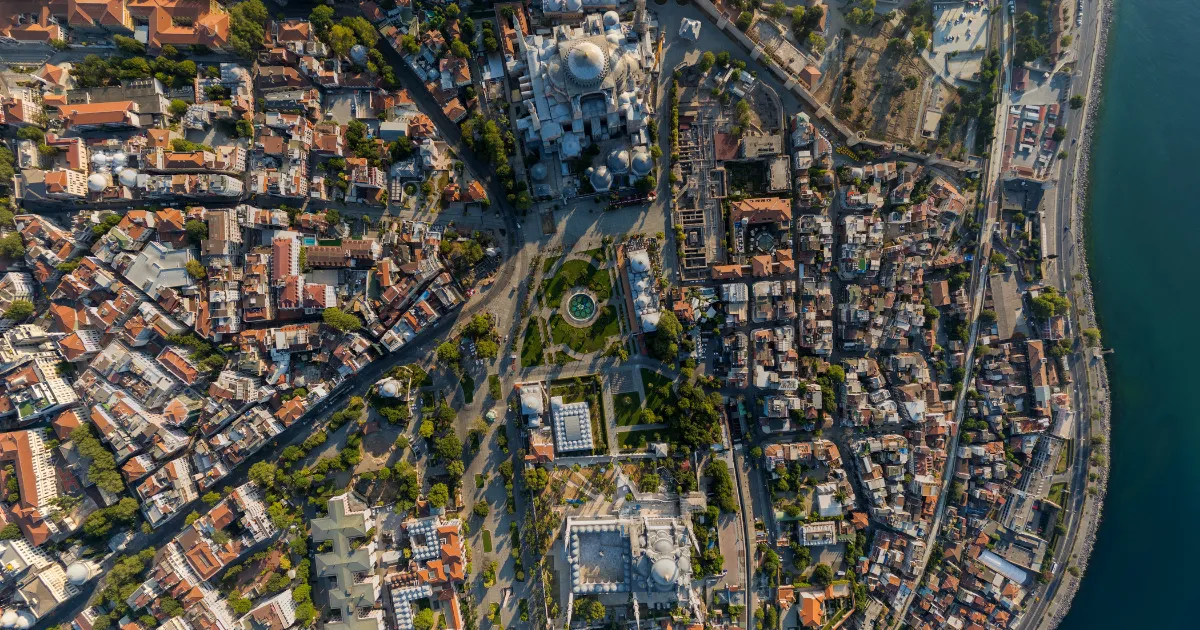
Leave time for the square beside the mosque. The monuments of the former Hippodrome make a natural continuation of your visit without requiring another indoor stop.
👉🏻 Our suggestion: Enjoy the mosque and square together before moving on to your next timed attraction.
What Should You Wear?

Choose loose, opaque clothing that covers your shoulders and knees. Women should bring a scarf to cover their hair; long trousers or a long skirt make planning simpler.
Remove your shoes before entering the carpeted interior, following staff instructions. Bringing socks can make the visit more comfortable.
The mosque provides loan garments for visitors whose clothing is unsuitable. Return anything borrowed to the designated cabin. Arriving appropriately dressed is still the easiest option.
Keep voices low, respect the separation between worship and visitor areas, and follow staff directions. The published visitor rules also state that strollers are not allowed inside.
How to Plan Your Visit
Keep Your Schedule Flexible
We suggest a morning visit on a non-Friday when it fits your itinerary. Leave a buffer before your next booking: a short visit can still involve waiting outside.
If access is temporarily paused, use the time for the square or a break nearby rather than crowding the entrance.
Be Considerate with Photography
Follow the photography signs and staff instructions. Avoid photographing worshippers without permission, switch off your flash and keep the visitor route clear.
This is a place of worship first and a sightseeing stop second.
Travelling with Children or Limited Mobility
Families should plan for the stroller restriction before joining the queue.
If you need step-free access, ask staff which entrance and route to use. Check arrangements for your particular needs rather than assuming every approach through the historic complex is identical.
How to Get to the Blue Mosque
From Sultanahmet

Walk across the square towards the mosque and follow the visitor-entrance signs. The most obvious doorway is not necessarily the current tourist entrance.
From Taksim

Take the F1 funicular to Kabataş, then the T1 tram towards Bağcılar. Get off at Sultanahmet and continue on foot.
From Karaköy or Eminönü

Take the T1 towards Bağcılar and leave at Sultanahmet. These stops are on the official T1 route.
Blue Mosque or Hagia Sophia: Which Should You Visit?

Visit the Blue Mosque for Ottoman architecture and a free visit to an active mosque.
Visit Hagia Sophia for a much older monument with Byzantine and Ottoman layers. Its tourist visitor route has separate admission arrangements.
They are different buildings, located opposite one another. If your schedule allows, combine them rather than treating one as a substitute for the other.
For more information, read our Hagia Sophia vs Blue Mosque Guide →
A Short History of the Blue Mosque

Commissioned by Sultan Ahmed I in the early seventeenth century, the mosque was designed by Sedefkâr Mehmed Ağa.
It formed part of a larger religious and social complex, rather than standing alone as a monument. Today, it lies within the Sultanahmet area of Istanbul’s UNESCO-listed Historic Areas. Read more in the Ministry of Culture’s historical overview.
Contact & Map
Frequently Asked Questions
Yes. Non-Muslim visitors are welcome during sightseeing hours, provided they follow the dress requirements and visitor rules.
No—the published Friday visitor opening time is 14:30. Arrange your other sightseeing first and check the entrance notices when you arrive.
They may be selling a guide or a combined experience. You are not required to buy a tour to enter the mosque. Read the inclusions before paying.
Plan the Rest of Your Sultanahmet Visit

Hagia Sophia: For Byzantine architecture and the building’s layered history.

Topkapi Palace: For Ottoman courtyards and collections; allow a separate, longer visit.

Grand Bazaar: For a change of pace after the historic monuments.