

Istanbul has hundreds of ancient underground reservoirs, but the Basilica Cistern is the largest and most famous. Other important cisterns include Serefiye Cistern, Binbirdirek Cistern, Nuruosmaniye Mahzeni, Zeyrek Cistern, and Sphendon Cistern. Most of the best-known cisterns are in or near the Old City. If you want the easiest first visit, start with the Basilica Cistern and continue with Serefiye Cistern and Binbirdirek Cistern. To avoid long lines, it is best to buy Basilica Cistern skip-the-line tickets online in advance.
Istanbul’s underground is one of the most fascinating parts of the city’s history. During the Byzantine period, a large system of underground reservoirs helped store fresh water for the capital during dry periods and sieges.
Today, these cisterns in Istanbul are some of the city’s most unusual and memorable historic sites. This guide covers six of the most important underground cisterns, what makes each one different, and how to plan your visit.
Basilica Cistern (Yerebatan Sarnıcı)

The Basilica Cistern is the largest and most famous of the underground cisterns in Istanbul. Built in 532 by Emperor Justinian I, it stands on the site of a former basilica that was destroyed by fire in 475. Covering nearly 10,000 m², it is the city's largest and most visited underground structure.
What You Will See
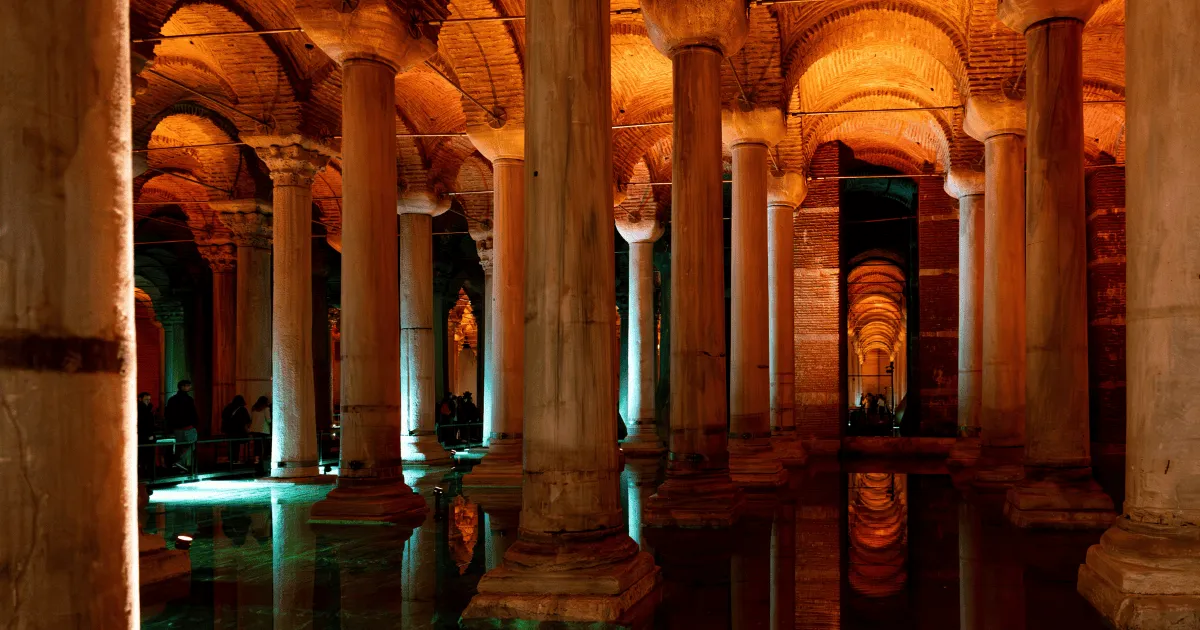
336 marble columns rise from the water, creating a forest of stone. The low lighting makes the water reflect like a dark mirror.
The Legend of Medusa

In the northwest corner, you’ll find the famous Basilica Cistern Medusa heads. One is upside down, and the other is sideways.
Why? Legend says it was to "neutralize" the Gorgon’s gaze, but historically, they were likely reused blocks from a Roman building.
The Wishing Well
Look for the pool filled with carp; visitors often drop coins here for good luck.
Ticket & Visit Info
Basilica Cistern ticket price: Prices can change, so it is best to check the latest Basilica Cistern tickets page before your visit.
Basilica Cistern hours: Opening hours can also change by season, so check the latest schedule before you go.
⚡ Best Time: Arrive right at opening time or later in the evening to avoid the heaviest crowds. Basilica cistern skip the line tickets are your best friend here.
Binbirdirek Cistern (Cistern of Philoxenos)

Located between the Forum of Constantine and the Hippodrome, the Binbirdirek Cistern was built in the 4th century and is known for its 224 columns. It is considered the second largest cistern in Istanbul.
Because it is often used for events today, the atmosphere here is very different from the Basilica Cistern. It feels drier, brighter, and more open.
It is also known as the Cistern of Philoxenos, because it is believed to have been connected to the nearby Philoxenos Palace.
Serefiye Cistern (Theodosius Cistern)

The Serefiye Cistern is one of the most interesting underground sites in Istanbul. Built by Emperor Theodosius II between 428 and 443, it is older than the Basilica but younger than Binbirdirek.
Water was carried here through the Valens Aqueduct (Bozdoğan Kemeri), which was one of the main parts of the Byzantine water system.
This cistern is famous for its 360-degree Projection Mapping show. It is one of the most striking examples of how digital projection can bring Istanbul's underground history to life. Telling the history of Istanbul through light and sound every hour.
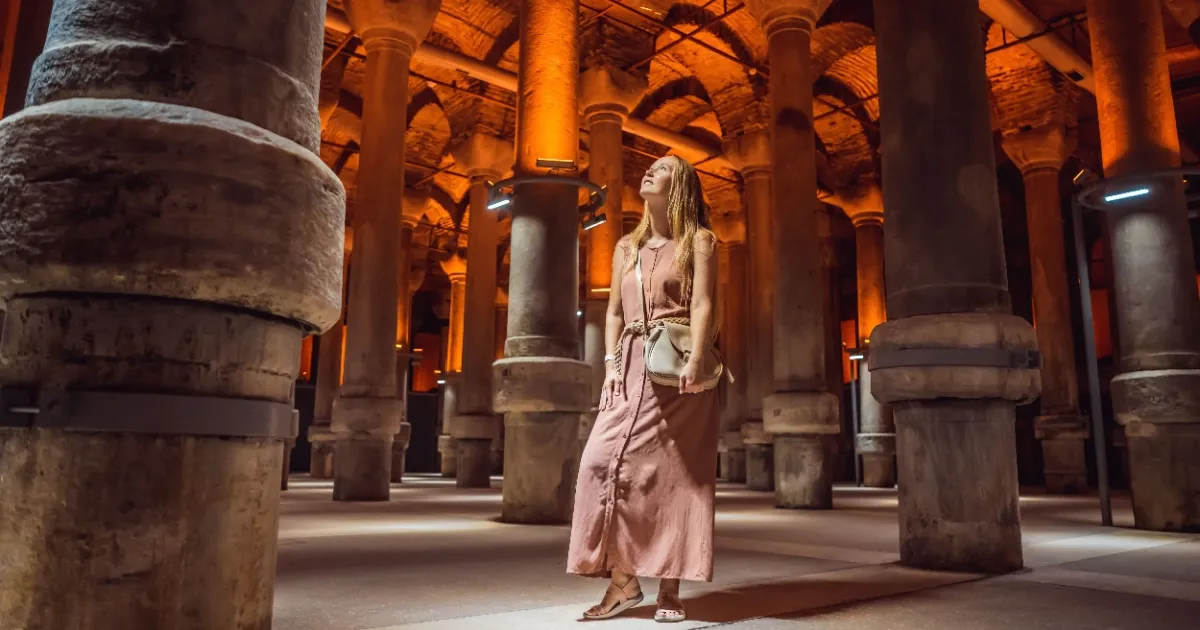
32 stunning columns made of Marmara Island marble, topped with Corinthian-style acanthus leaf capitals.
The cistern is located on Pierre Loti Street in the Old City and is often visited together with the Basilica Cistern and Binbirdirek Cistern on the same day. The hourly projection show is one of the main reasons people visit, so timing matters here more than at most other cisterns.
Nuruosmaniye Mahzeni (The Cellar)

This area was rediscovered during a 2013 restoration after being buried for 270 years. Located directly beneath the Nuruosmaniye Mosque near the Grand Bazaar, it spans 825 square meters across 19 sections.
It feels less like a cistern and more like a secret subterranean city, with its vaulted ceilings and archways. Today, it is better known as a rare event and exhibition space than as a standard tourist stop, which makes it one of the more unusual underground sites in Istanbul.
With its vaulted structure, colonnaded layout, and deep chambers, it still feels visually close to a traditional water cistern.
Zeyrek Cistern (Unkapanı Cistern)

This cistern served the Pantokrator Monastery (now the Zeyrek Mosque). What makes it unique is the contrast—it lies directly under the 16th-century Piri Mehmet Pasha Mosque.
Recent restorations have made it accessible, offering a rare look at how Byzantine water infrastructure supported Ottoman religious life.
It is also close to the Zeyrek Mosque, the former Pantokrator Monastery, and the area offers impressive views toward the Aqueduct of Valens and the historic peninsula. This gives the visit a very different atmosphere from the cisterns in Sultanahmet.
After recent restoration work, the cistern has become much easier to understand and appreciate as part of the wider Zeyrek historic area.
Sphendon Cistern

Located at the southwest end of the Hippodrome, this is technically a remnant of the Great Palace’s support structure that was converted into a cistern in the 9th century after a massive earthquake.
It has a raw and unpolished feel compared to the more touristy sites. Unlike the more polished cisterns in Sultanahmet, Sphendon feels rougher and more structural — that is part of its appeal.
It is the only surviving part of the Hippodrome structure that visitors can still enter today. It was also associated with the lower social ranks of the Hippodrome and the wider palace area.
A Russian traveler described it in detail in the late 14th century, which helped later historians understand the site better.
Comparison: Which Cistern Should You Visit?

| Cistern | Best Known For | Size / Scale | Atmosphere | Best For |
|---|---|---|---|---|
| Basilica Cistern | Medusa heads, reflections, 336 columns | Largest and most famous | Dark, dramatic, mystical | First-time visitors |
| Binbirdirek Cistern | 224 columns, event use | Second largest | Drier and more open | Architecture and events |
| Serefiye Cistern | 360° projection mapping | Smaller than Basilica | Historic + digital experience | Visitors who want a show |
| Nuruosmaniye Mahzeni | Hidden gem near Grand Bazaar | Medium | Quiet, vaulted, unusual | Hidden places and exhibitions |
| Zeyrek Cistern | Monastery and mosque contrast | Smaller, less polished | Historic and less touristy | History lovers |
| Sphendon Cistern | Hippodrome structure | Raw and structural | Rough and atmospheric | Travelers looking for hidden gems |
If you only have time for one, start with the Basilica Cistern. If you want to see more than one in a single day, combine Basilica, Serefiye, and Binbirdirek in the Old City.
Expert Advice for Your Underground Tour

Basilica Cistern
Start with the Basilica Cistern at 09:00 AM.
Serefiye Cistern
Walk 5 minutes to the Serefiye Cistern for the 10:00 AM light show.
Binbirdirek Cistern
Finish with a walk through the Binbirdirek Cistern before heading to the Grand Bazaar.
To save money, look for Hagia Sophia, Topkapi Palace, and Basilica Cistern combo tickets. It is one of the easiest ways to visit all three major landmarks in one day. Many visitors also prefer to add a Bosphorus cruise to this trio for a complete Istanbul experience. 👉 Compare the best-value Istanbul combo ticket options.
Use a "Night Mode" setting on your phone. Flash is usually useless here as it bounces off the damp columns and ruins the mood.
It is usually 5–10 degrees cooler underground. Even in July, bring a light cardigan if you get cold easily!
Frequently Asked Questions (FAQs)
Opening hours usually continue through the day into the evening, but it is best to check the latest schedule before your visit.
No. The Basilica Cistern has a shallow layer of water for aesthetics, but others like Serefiye and Binbirdirek are mostly dry to allow for light shows and events.
The Basilica Cistern is managed by the Municipality (IBB), so the National Museum Pass is generally not valid. You will need a separate basilica cistern ticket.
Conclusion: Why Istanbul Went Underground

The cisterns of Istanbul show how advanced Byzantine water engineering really was. Without them, the city could not have stored enough fresh water during dry periods or sieges. Visiting these underground spaces helps you understand a different side of Istanbul’s history.
After visiting the cisterns, many travelers continue with Topkapi Palace, Hagia Sophia, or a relaxing Turkish Hammam experience.
To make your day easier, use your Istanbul Card for transport between sites.